

Events |
News |
Sites |
Dates for your diary
Advanced Notice
- Sunday 7th July 2024 - BDS (British Dragonfly Society) Field Trip to Great Wheal Seton. Meet at 10:30am.
Volunteer Dates for the season 2023/24
- Saturday 30th September 2023 - A day of Practical Conservation Work at Bell Lake Marsh, part of the Red River Local Nature Reserve near Camborne
- Saturday 28th October 2023 - A day of Practical Conservation Work at Bell Lake Marsh, part of the Red River Local Nature Reserve near Camborne
- Saturday 25th November 2023 - A day of Practical Conservation Work at Bell Lake Marsh, part of the Red River Local Nature Reserve near Camborne
- Saturday 30th December 2023 (Christmas Scrub Bash) - CANCELLED
- Saturday 27th January 2024 - A day of Practical Conservation Work at Great Wheal Seton, part of the Red River Local Nature Reserve near Camborne
- Saturday 24th February 2024 - A day of Practical Conservation Work at Bell Lake Marsh, part of the Red River Local Nature Reserve near Camborne
- Saturday 30th March 2024 - A day of Practical Conservation Work at Bell Lake Marsh, part of the Red River Local Nature Reserve near Camborne (see Events tab for more details)
Latest News
Steve Jones Presents at the British Dragonfly Society (BDS) Spring Meeting
Great Wheal Seton has a new walkway!
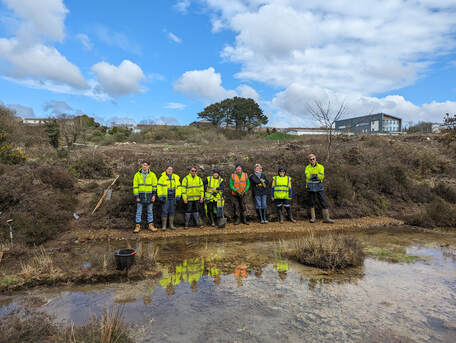 Photo taken by Ben Clitherow
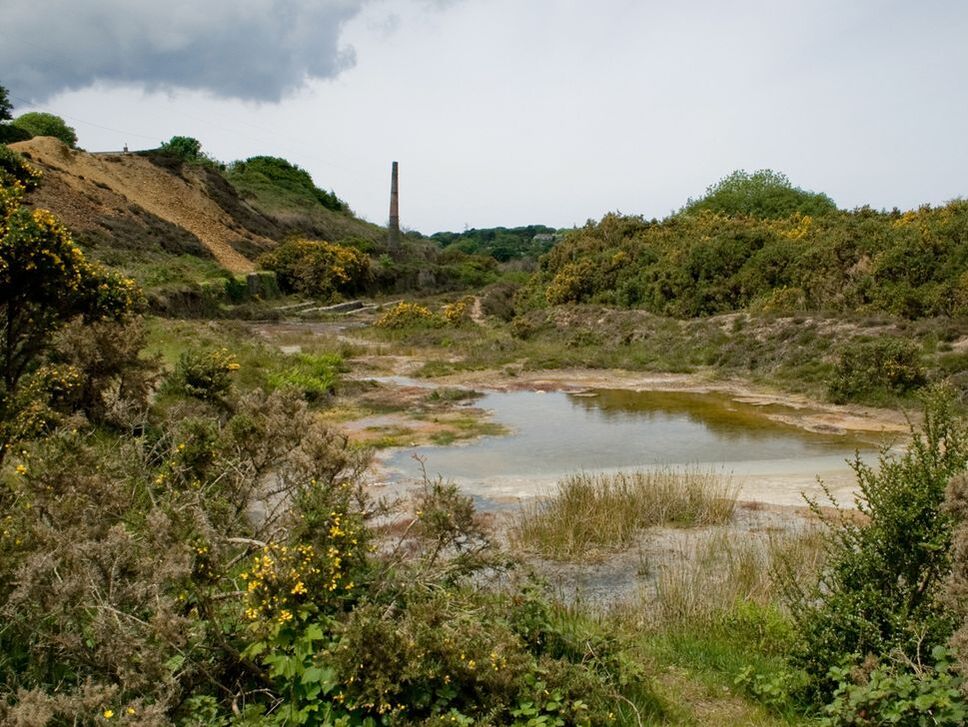
Great Wheal Seton is perhaps the most important site along the Red River Valley Local Nature Reserve.
Thanks to the legacy of its Tin Streaming past it has evolved into a rich mosaic of wetland habitats which support a diverse range of dragonflies & damselflies, including nationally significant populations of Small Red and Scarce Blue-tailed Damselflies.
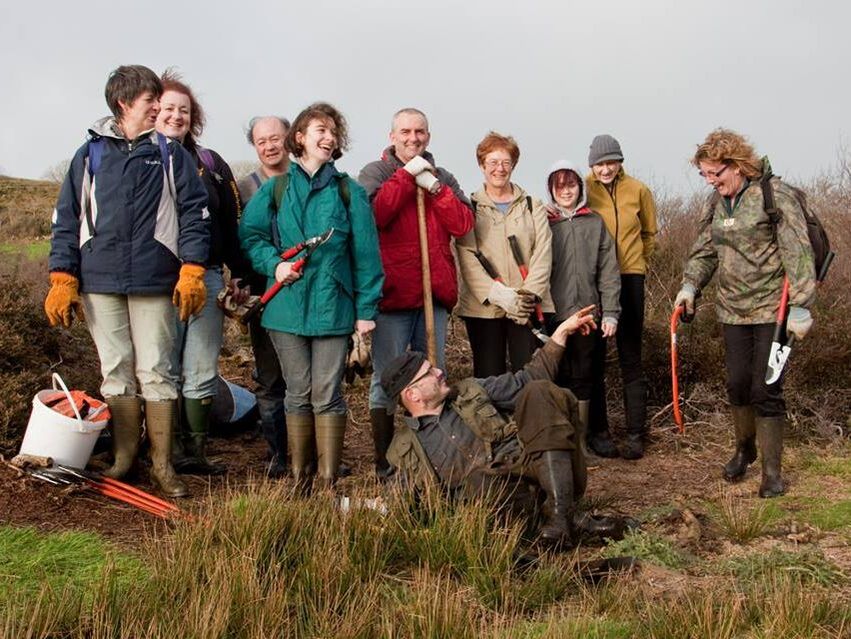
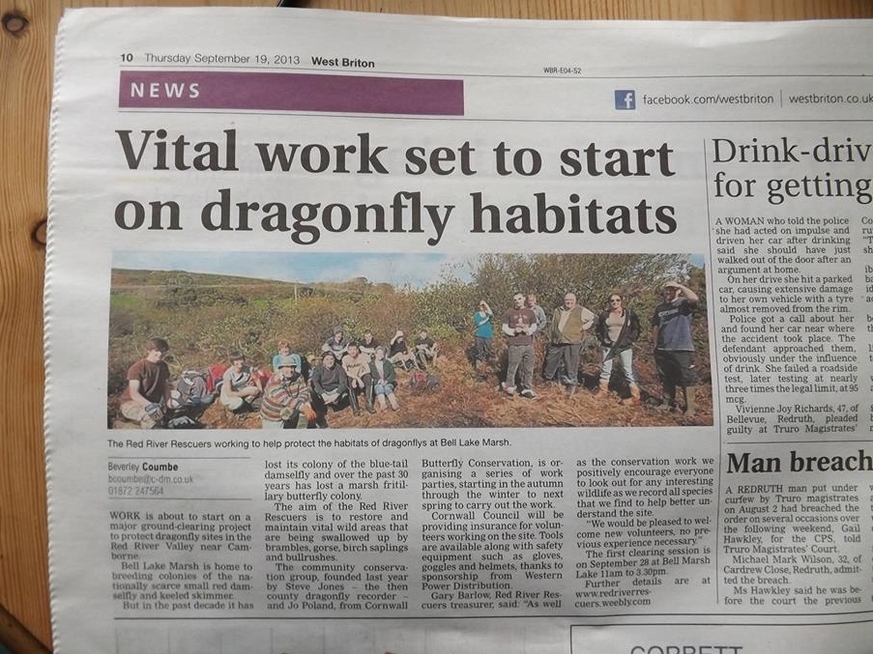
The Red River Rescuers have worked hard to keep this vital reservoir of species in good condition with regular scrub bashing sessions to manage the habitat, and field trips to monitor populations and introduce the unique tin streaming flora & fauna to new audiences.
However, this wetland gem has harboured a problem for all the 45+ years that I have known it as a key dragonfly site. The northern end of the complex has always been really difficult to access unless you are happy with the prospect of clambering up on to a narrow section of wall that has a 2 metre drop to the Red River on one side and a 1.5 metre drop down to a deep section of pool on the other. It was off putting to many volunteers & visitors, and obviously had safety implications for the mid-section of the site.
So during a visit to Great Wheal Seton in the summer of 2022 I was chatting with Ben Clitherow, a really supportive and helpful member of the team at Cornish Metals and he suggested that if ever we had a small project that needed some manpower along the LNR, Cornish Metals would be more than happy to come along and provide some muscle.
I immediately suggested constructing a stone walkway across the section of pool, at the base of the wall, that was at the root of our access problems.
My idea was to collect stone from the scree slope that overlooks the site and use it as hardcore for a walkway. Ben jumped at the idea and when all the stars finally aligned at the beginning of 2024 we jumped into action.
During our January scrub bashing session our Red River Rescuers volunteers cleared the pathways to give wheelbarrow access to the supply of stones that we needed to transport across the width of the site. Once that was done, I met Gavin Henderson, the CORMAC Countryside Ranger, on site in late January to talk through the proposal and get permission to carry out the work. Gavin was very supportive and gave us his seal of approval for the work, so I set a date with Ben, and on a sunny 7th March 2024, Jo Poland & I joined 9 volunteers from Cornish Metals at the reserve for a taste of heavy rock redistribution.
Thanks to the legacy of its Tin Streaming past it has evolved into a rich mosaic of wetland habitats which support a diverse range of dragonflies & damselflies, including nationally significant populations of Small Red and Scarce Blue-tailed Damselflies.
The Red River Rescuers have worked hard to keep this vital reservoir of species in good condition with regular scrub bashing sessions to manage the habitat, and field trips to monitor populations and introduce the unique tin streaming flora & fauna to new audiences.
However, this wetland gem has harboured a problem for all the 45+ years that I have known it as a key dragonfly site. The northern end of the complex has always been really difficult to access unless you are happy with the prospect of clambering up on to a narrow section of wall that has a 2 metre drop to the Red River on one side and a 1.5 metre drop down to a deep section of pool on the other. It was off putting to many volunteers & visitors, and obviously had safety implications for the mid-section of the site.
So during a visit to Great Wheal Seton in the summer of 2022 I was chatting with Ben Clitherow, a really supportive and helpful member of the team at Cornish Metals and he suggested that if ever we had a small project that needed some manpower along the LNR, Cornish Metals would be more than happy to come along and provide some muscle.
I immediately suggested constructing a stone walkway across the section of pool, at the base of the wall, that was at the root of our access problems.
My idea was to collect stone from the scree slope that overlooks the site and use it as hardcore for a walkway. Ben jumped at the idea and when all the stars finally aligned at the beginning of 2024 we jumped into action.
During our January scrub bashing session our Red River Rescuers volunteers cleared the pathways to give wheelbarrow access to the supply of stones that we needed to transport across the width of the site. Once that was done, I met Gavin Henderson, the CORMAC Countryside Ranger, on site in late January to talk through the proposal and get permission to carry out the work. Gavin was very supportive and gave us his seal of approval for the work, so I set a date with Ben, and on a sunny 7th March 2024, Jo Poland & I joined 9 volunteers from Cornish Metals at the reserve for a taste of heavy rock redistribution.
